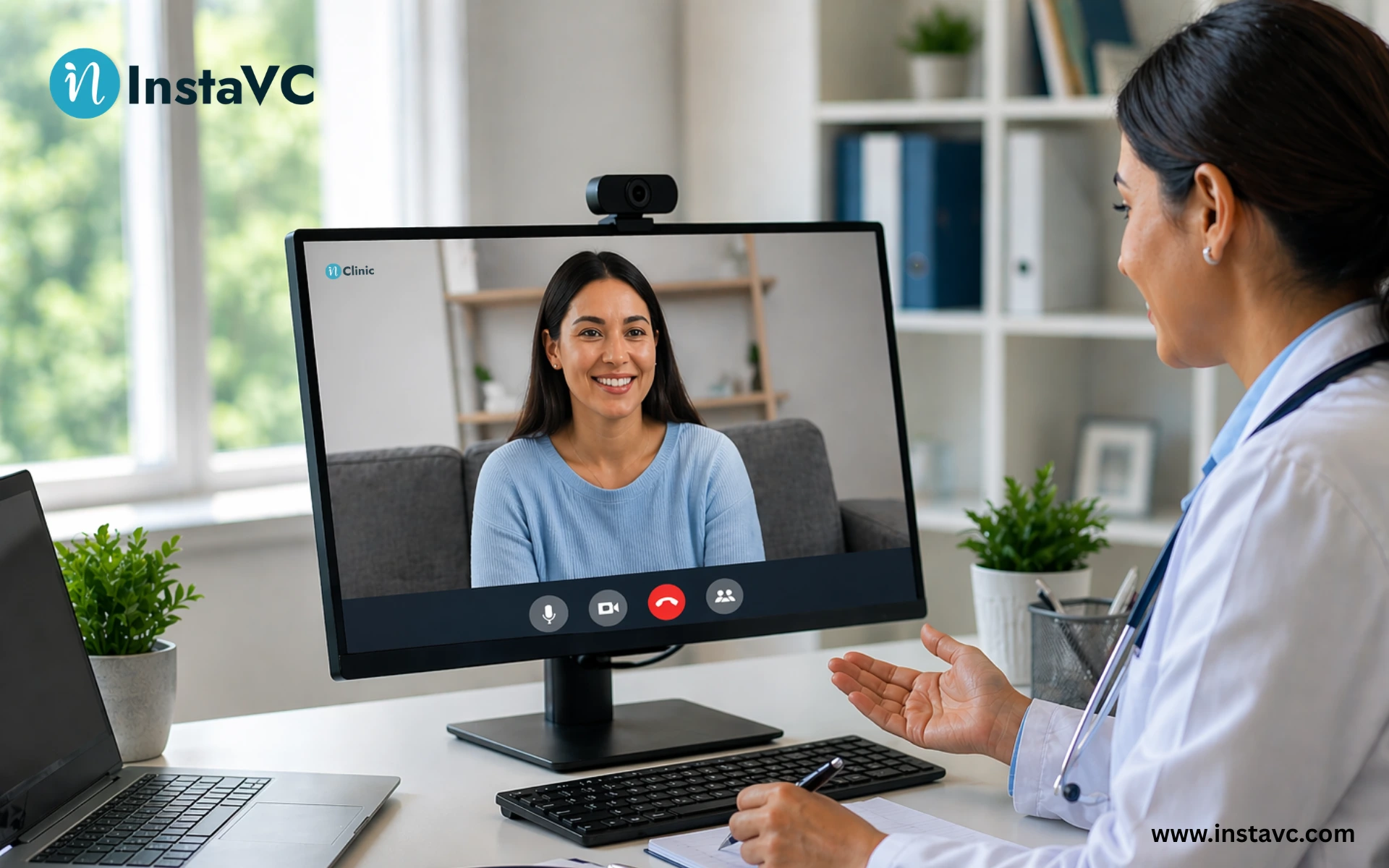
A virtual healthcare platform lowers hospital costs, cuts patient wait times, and improves access to care. It connects scheduling, patient records, and secure billing into one smooth online clinic platform, going far beyond basic video calls.
Hospitals today face tight budgets, long wait lines, and exhausted medical staff. Moving to a digital care model helps solve these exact problems. However, hospital leaders often wonder if the investment in new software will actually pay off.
This guide breaks down the real return on investment (ROI), the daily benefits for doctors and patients, and the actual use cases that make this technology essential for modern hospitals.
Table of Contents
- The Real ROI of Virtual Care for Hospitals
- Virtual Healthcare Platform vs. Basic Telemedicine
- Solving the Doctor Burnout Problem
- The Patient Experience: Keeping It Simple
- Real Use Cases in Modern Hospitals
- Security and Compliance: Keeping Patient Data Safe
- Managing Virtual Workflows and Teams
- Connecting to Existing Hospital Systems
- Making the Final Decision
- Frequently Asked Questions (FAQ)
The Real ROI of Virtual Care for Hospitals
When you look at the financial side, the value of a digital clinic becomes clear very quickly. According to recent medical studies on no-show rates, hospitals that use a full digital system see a massive drop in missed appointments. This directly protects hospital revenue.
Here is a close look at how a dedicated system brings real financial return to your hospital:
- Fewer Missed Visits: Patients often miss appointments due to traffic, bad weather, or lack of transport.Virtual visits remove these physical barriers.Automated text and email reminders keep patients on track and ensure the doctor’s schedule stays full.
- Lower Facility Costs: When more patients see doctors online, the hospital uses fewer physical resources. You save money on waiting room space, physical exam rooms, paper products, and basic medical supplies like gloves and gowns.
- Wider Patient Reach: A physical building limits your hospital to local patients. An online clinic platform allows your doctors to treat patients who live hours away or in rural areas that lack good medical care. This brings new patients into your health system.
- Better Staff Time: Doctors spend less time walking between rooms and waiting for patients to arrive. A smart platform moves the doctor from one virtual room to the next instantly.
- Faster Billing Cycles: Good platforms log the exact start and end time of every visit. The billing team uses this exact data to send clean, accurate bills to insurance companies. This speeds up payments and stops denied claims.
Need help fixing hospital workflows and stopping missed appointments? See how our smart booking system speeds up intake. Book a personalized demo of our platform.
Virtual Healthcare Platform vs. Basic Telemedicine
Many clinics make the mistake of using consumer video apps for medical care. These basic apps are fine for chatting with friends, but they fail in a real medical setting. They do not connect to hospital records and lack proper security.
To understand the exact steps to transition away from basic tools, read our complete virtual clinic software guide.
A true virtual platform is a complete medical workspace. It is professional video collaboration software built specifically for healthcare. Here is how a real platform compares to basic apps:
| Feature | Basic Telemedicine App | Dedicated Virtual Healthcare Platform |
|---|---|---|
| Patient Records | Manual entry only | Connects directly to hospital data |
| Waiting Rooms | None | Secure virtual waiting areas with patient queue |
| Billing Tracking | Hard to track visit length | Logs exact time for accurate, clean bills |
| Security Standard | Basic consumer privacy | Full medical-grade security |
| Doctor Workflow | Separate screen for notes | Notes and video on the same screen |
Solving the Doctor Burnout Problem
Doctors are tired. They spend hours every day clicking through confusing software and typing notes after their shifts end. A good digital system must make the doctor’s job easier, not harder.
- Everything in One Place: Doctors do not want to switch between a video screen and a patient record screen. A proper platform puts the video feed, the patient history, and the medical notes in one single view.
- Smart Scheduling: You cannot treat doctors like on-demand drivers. A good system handles complex schedules, blocks out time for breaks, and respects the doctor’s real working hours.
- Automated Intake: Before the doctor even joins the call, the software asks the patient basic questions about their symptoms. The doctor reads this summary instantly and starts providing care right away without wasting the first ten minutes on basic questions.
The Patient Experience: Keeping It Simple
If the software is hard to use, patients will not use it. Older patients or those who are not good with technology often struggle to download heavy applications or remember complex passwords.
The best platforms focus on simple access. They provide Web & App Access, meaning patients can choose exactly how they join. They can download a dedicated app if they want, or they can simply click a safe web link sent to their phone or email. This removes the tech barriers. The patient clicks the link, enters a secure virtual waiting room, and waits for the doctor.
Tired of patients struggling with app downloads before their visit? Give them simple access. Explore our secure virtual healthcare platform.
Real Use Cases in Modern Hospitals
Hospitals use these systems for much more than just treating common colds or sinus infections. Real use cases span across many different medical departments.
- Post-Surgery Follow-ups: After a major surgery, traveling back to the hospital is painful and dangerous for the patient. Doctors use video calls to check healing progress, look at surgical wounds, and adjust pain medication without making the patient leave their bed.
- Mental Health Therapy: Therapists and psychiatrists need a safe, private space for ongoing care. Virtual platforms give patients the comfort of talking from their own homes. This leads to more consistent therapy sessions and better mental health outcomes.
- Chronic Care Tracking: Patients with heart disease or diabetes need constant monitoring. Doctors use virtual platforms to check blood pressure and blood sugar data from remote devices between visits. This helps spot warning signs early before the patient needs emergency care.
- Urgent Care Triage: When a patient feels sick, they often go straight to the emergency room, even if they do not need to. A virtual triage system lets a nurse speak to the patient online first. The nurse can tell the patient to stay home and rest, go to a local clinic, or head to the emergency room. This keeps the emergency room clear for true emergencies.
- Specialist Consultations: Small rural hospitals do not always have experts like neurologists on staff. With a digital platform, a rural doctor can bring a city specialist onto the video call to help diagnose a complex patient case instantly.
Security and Compliance: Keeping Patient Data Safe
Protecting patient facts is the absolute most important part of digital care. Public video apps put hospitals at massive risk of data leaks and heavy fines.
According to federal guidelines for secure telehealth, strict access controls stop unauthorized users from joining medical calls. A proper system encrypts all video, audio, and text data. This means that even if a hacker tries to listen, the data looks like scrambled code.
To protect your hospital, you must ensure your system meets all privacy laws. You can learn how to build a safe system with a HIPAA telehealth platform.
- Secure Waiting Rooms: Patients wait in private digital rooms. They cannot see or hear other patients.
- Data Control: The hospital owns all the data. The video software company cannot look at the patient records or sell the data.
- Audit Trails: The software tracks exactly who logs in, what files they look at, and how long they stay. This helps hospital IT teams spot any strange activity instantly.
Managing Virtual Workflows and Teams
Running a hospital means managing hundreds of moving parts. A digital clinic is no different. Hospital administrators need tools to run the online clinic smoothly behind the scenes.
- Move Patients Quickly: In a busy virtual clinic, nurses need to move patients from a general waiting room into a specific doctor’s private room. Good software allows staff to manage participants easily, moving them around just like in a physical building.
- Multi-Doctor Calls: Sometimes a patient needs to speak to their primary doctor and a heart specialist at the same time. The platform must allow multiple doctors to join the same secure call without dropping the connection.
- Screen Sharing for Test Results: Doctors need to show patients their X-rays or blood test results. Safe screen sharing lets the doctor point out specific details on the scan so the patient understands their own health better.
Connecting to Existing Hospital Systems
A new software tool is useless if it does not talk to the tools your hospital already uses. The best virtual platforms connect directly to your hospital’s main Electronic Health Record (EHR) system.
When the systems connect, magic happens. The doctor schedules the video visit in the main hospital system. The virtual platform automatically creates the secure video link and sends it to the patient. When the visit ends, the exact length of the call and the doctor’s notes save directly back into the main patient file. There is no double-typing, no lost data, and no confusion.
This deep connection also helps the pharmacy. If the doctor prescribes medicine during the virtual call, the system sends the order straight to the patient’s local pharmacy automatically. The patient just drives over and picks it up. This smooth process builds trust and keeps patients happy.
Making the Final Decision
Choosing to adopt a comprehensive digital system is a big step for any hospital. It requires training staff, changing old habits, and investing money upfront. However, the long-term benefits clearly outweigh the initial effort.
By reducing missed visits, saving physical resources, speeding up billing, and keeping doctors happy, a strong platform pays for itself. Most importantly, it gives patients the fast, easy, and safe medical care they expect today.
Frequently Asked Questions
What is a virtual healthcare platform?
It is a complete digital system that allows hospitals to manage online patient visits, share medical notes, and handle billing safely in one single place. It replaces basic video apps with a secure, medical-grade workspace.
How does a hospital measure the ROI of online care?
Hospitals track the drop in missed appointments, the time saved by doctors between visits, and the reduction in physical clinic costs. They also look at new revenue gained by reaching patients in distant areas.
Why do basic video apps fail in hospital settings?
Basic consumer apps lack the strict security required by privacy laws. They also fail to connect to medical records, forcing doctors to type notes twice and wasting valuable time.
How do older patients handle the technology?
The best platforms use simple web links. Patients do not need to create accounts or download large applications. They simply click a secure link sent via text message to join the doctor instantly.
Is online patient data actually safe from hackers?
Yes, if you use a certified platform. Real medical platforms use deep encryption for all video and text. They also use secure waiting rooms and strict login rules to ensure only the right doctor and patient can join the call.